
Palm Bay, FL · 321-804-8235
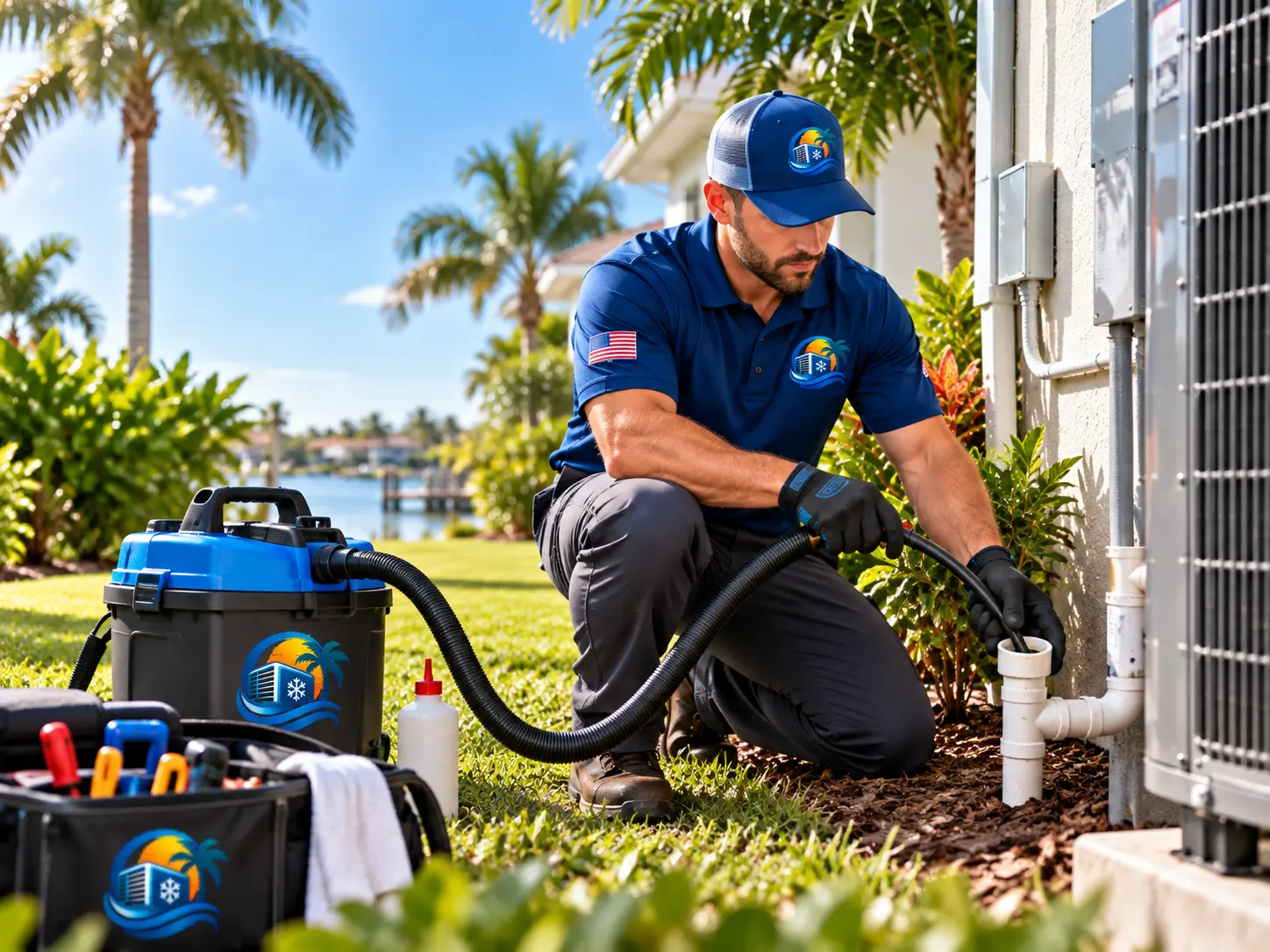
AC Drain Line Cleaning in Palm Bay, FL
A clogged condensate drain is one of the most common AC service calls in Florida. It causes water leaks, musty odors, and system shutdowns when the float safety switch does its job.
What this service covers
Every air conditioner is also a dehumidifier. In Palm Bay's climate, a residential system can pull gallons of water out of indoor air on a humid day, and all of it drains through a small PVC line. That line is dark, damp, and constantly wet — ideal conditions for biological growth.
When the drain blocks, one of two things happens. Either the float switch shuts the system down before water escapes, or water overflows the pan into a closet, garage, or ceiling. Neither is dramatic at first, which is why drain problems are frequently discovered as a stain rather than as a puddle.
Symptoms
Signs you need this repair
- The AC shuts off on its own and later restarts
- Water in the drain pan or on the floor near the air handler
- Ceiling stains beneath an attic-mounted unit
- Water dripping from the secondary drain outside a wall
- Musty or sour odor near the air handler or in supply air
- Gurgling sounds from the drain line
Causes
What usually causes the problem
Biological slime buildup
Algae and bacterial growth thrive in a constantly wet drain and eventually form a plug, usually near a trap or elbow.
Dust and debris
Fine dust that passes the filter settles in the pan and combines with moisture into sludge.
Improper slope or sagging line
A line that lost its pitch traps standing water and clogs repeatedly no matter how often it is cleared.
Missing or poorly designed trap and vent
An incorrect trap causes air to pull through the drain instead of water flowing out.
Rusted or cracked pan
Older secondary pans and rusted primary pans let water bypass the drain path entirely.
Insect and small-animal intrusion
Open drain terminations outdoors can be blocked by nests, mud, or debris.
Diagnosis
How the problem is diagnosed
Measurement comes before parts. These are the checks that separate one cause from another.
- Pan water level and float switch condition
- Drain line clearing at the cleanout and at the exterior termination
- Verification of free flow after clearing, using measured water volume
- Slope, support, and trap configuration inspection
- Secondary drain and emergency pan condition
- Evaporator coil cleanliness, since a dirty coil sheds debris into the pan
- Surrounding materials for moisture damage or growth
Repair options
What the repair involves
Vacuum and flush clearing
Removing the blockage from the termination side and flushing the line restores drainage without pressurizing the joints.
Trap and fitting correction
Rebuilding a poorly configured trap or restoring slope stops repeat clogs that clearing alone never solves.
Pan and switch service
Cleaning the pan, replacing a failed float switch, or replacing a rusted pan protects the home from overflow.
Preventive treatment
Pan tablets and periodic flushing slow biological growth, particularly on systems that run nearly year-round.
Urgency
How quickly this should be handled
Active water reaching drywall, ceilings, or flooring
A float switch shutting the system down repeatedly
Visible mold growth or a strong musty odor near the unit
Water near electrical components inside the air handler
Palm Bay conditions
Why this happens here
Florida drain clogs are not a maintenance nicety — they are the single most preventable cause of interior water damage from an HVAC system. Long humid seasons mean condensate flows for months at a time, so growth in the line is continuous rather than seasonal.
Attic installations are common in Palm Bay, which raises the stakes. A drain failure above a ceiling can damage insulation, drywall, and finishes well before anyone hears or sees anything unusual, so float switch function deserves as much attention as the line itself.
Cost
What affects the price of this repair
No two systems are identical. These factors move the number up or down, and each is explained before work begins.
Simple clearing versus reconfiguration
Clearing a soft clog is among the least expensive AC services. Correcting slope or rebuilding a trap adds labor and materials.
Access
Attic and tight-closet drain work takes longer than an accessible garage installation.
Additional components
Replacing a float switch, pan, or damaged fittings adds modest part cost.
Water damage
Any restoration needed for drywall, insulation, or flooring is separate from the HVAC repair.
Frequently asked questions
- Can a clogged drain line stop my AC from cooling?
- Yes, and it is a good outcome when it does. Most Florida systems include a float safety switch that interrupts the cooling call when water backs up in the pan or the secondary drain. From the homeowner's side, this looks like an air conditioner that stopped cooling for no obvious reason and may restart hours later once water level drops. The system is not broken in the mechanical sense — it is protecting your ceiling. The correct response is to have the drain cleared and the pan checked rather than bypassing the switch, which some homeowners are tempted to do and which trades a cooling problem for a water damage problem.
- How often should an AC drain line be cleaned in Florida?
- Given how long the cooling season runs here, an annual clearing and inspection is a reasonable baseline, and systems with a history of clogs benefit from twice-yearly attention. Homes with pets, ongoing construction dust, or a dirty evaporator coil tend to build sludge faster. Between visits, many homeowners pour a cup of distilled vinegar or use manufacturer-approved pan tablets to slow growth. The strongest signal that it is time is any sign of pan water, a musty smell at the return, or a system that shut itself off and restarted — that last one usually means the float switch has already acted.
- What should I not do to a clogged AC drain?
- Avoid forcing compressed air or pressurized water into the line. PVC condensate lines are joined with glued fittings that were never designed for pressure, and a separated joint inside a wall or above a ceiling causes exactly the water damage you were trying to prevent. Avoid bleach in systems with metal pans or components, since it accelerates corrosion; vinegar or approved treatments are gentler. Do not disable or jumper the float switch to keep cooling running. And avoid repeatedly clearing a line that clogs every few weeks — that pattern points to a slope, trap, or coil problem that needs correcting rather than another flush.
- Why does my drain line clog again so quickly?
- Fast repeat clogs almost always mean the drain assembly itself is working against you. The most common reasons are a line that has lost its downward slope and holds standing water, a sagging section between supports, an incorrect or missing trap that lets air short-circuit the flow, and a dirty evaporator coil that keeps shedding debris into the pan. Undersized or long horizontal runs contribute as well. Solving it means correcting the physical drain path and cleaning the coil, not just clearing the plug — otherwise you are removing the symptom every few weeks while the cause stays in place.
Related AC services
Areas we serve in Palm Bay
Talk through your AC problem now
Describe what your system is doing — not cooling, leaking, freezing, short cycling, or completely off — and get straightforward next steps.
Air Conditioner Repair Palm Bay FL1501 Robert J Conlan Blvd NE, Suite #459
Palm Bay, FL 32905