
Turkey Creek · Palm Bay, FL · 321-804-8235
AC Repair in Turkey Creek, Palm Bay FL
AC repair near Turkey Creek in Palm Bay, FL. Debris-laden condenser coils, high humidity loads, and drainage problems in a heavily shaded area. Call 321-804-8235.
Air conditioning repair in Turkey Creek
Homes near the Turkey Creek corridor sit among some of the heaviest tree cover in Palm Bay. Mature canopy and dense understory shade rooftops and outdoor equipment, which sounds like an advantage — and partly is — but it also means outdoor coils collect leaf litter, seed debris, and organic matter far faster than units in open yards.
Shade and vegetation also keep humidity high around equipment pads. Damp conditions accelerate corrosion on cabinets and electrical terminals, and they support biological growth in condensate systems. The result is a repair pattern weighted toward coil cleaning, drainage, and corrosion-related electrical faults.
Common problems
Common AC issues in Turkey Creek
Debris-blocked condenser coils
Leaves, seed pods, and organic litter mat outdoor coil fins, reducing heat rejection and raising operating pressures on hot days.
Persistent humidity complaints
Depending on the home's age and HVAC installation, cool but clammy conditions can occur, which usually traces to airflow, oversizing, or capacity loss rather than temperature control.
Drain line biological growth
Consistently damp, shaded conditions encourage growth in condensate lines and pans, leading to clogs and float switch shutdowns.
Corroded electrical connections
Damp equipment compartments cause resistance and heat at terminals, which shortens the life of capacitors and contactors.
Services
AC repairs commonly needed in Turkey Creek homes
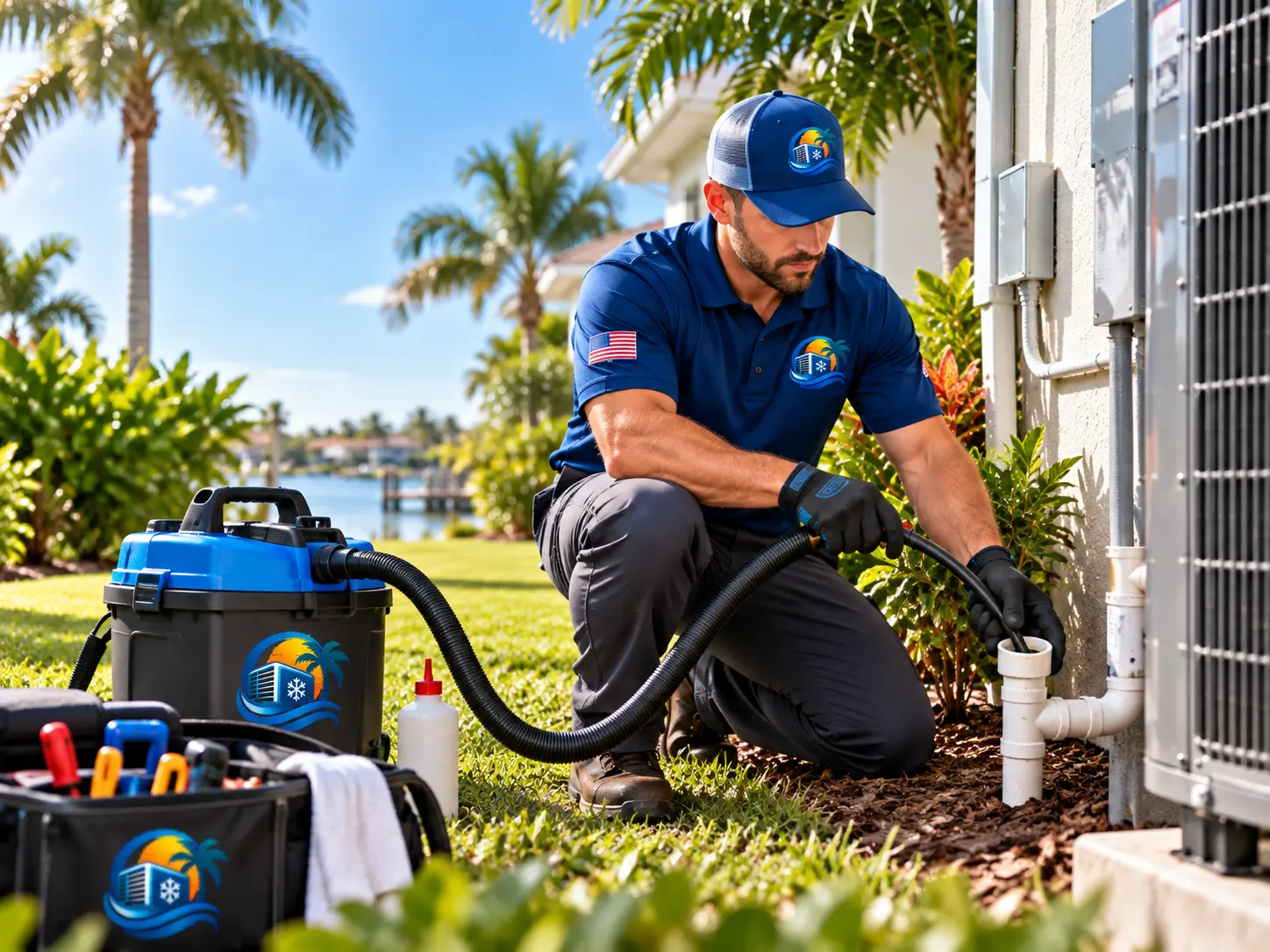
Service in this area routinely includes thorough condenser coil cleaning and clearance work, condensate drain clearing with pan and float switch inspection, electrical compartment inspection for corrosion and heat damage, and evaporator coil cleaning where dirt has reduced heat transfer.
Humidity complaints get treated as a measurable problem rather than a preference. Static pressure, temperature split, and run-time behavior indicate whether the system is short on airflow, short on capacity, or cycling too quickly to dehumidify — and each of those has a different fix.
Local conditions
Why Turkey Creek systems behave this way
Heavy shade reduces solar gain on roofs and walls, which genuinely lowers cooling load. The tradeoff is airflow around outdoor units: equipment tucked behind hedges or under overhanging branches cannot reject heat properly, and clearance work often produces immediate improvement.
Organic debris is the defining maintenance issue near the creek corridor. Coils that look acceptable from the outside are frequently packed on the entering-air side, and proper cleaning — not a garden hose from the outside — restores capacity that had been quietly lost.
Vegetation also brings insects and small animals closer to equipment. Blocked drain terminations and nests in electrical compartments are worth checking during any diagnosis in this area.
Cost
What affects repair cost in this area
Pricing depends on the actual fault and the work required. These are the factors that matter most here.
- Depth of coil cleaning required, which increases with accumulated organic debris
- Whether corrosion has damaged terminals, contactors, or wiring beyond simple cleaning
- Extent of drain work, from a simple clearing to correcting slope or replacing a pan
- Whether humidity complaints require duct or airflow correction in addition to equipment repair
- Clearance work around outdoor units where vegetation has grown in
Turkey Creek AC repair questions
- Does heavy tree cover help or hurt my air conditioner?
- Both, in different ways. Shade on the roof and walls lowers heat gain into the house, which reduces the load your system has to handle — that is a real benefit. But shade over the outdoor unit itself provides much less benefit than people expect, and the accompanying debris does measurable harm. Leaves, seed pods, and organic litter pack into the coil fins where you cannot see them, blocking the airflow the unit needs to reject heat. Overhanging branches and dense shrubs also restrict airflow around the cabinet. The best of both worlds is shade on the house with two feet of clear space and a clean coil at the equipment.
- Why is my house cool but still feel humid near Turkey Creek?
- Cool-but-clammy nearly always means the system is not running long enough, or not moving air correctly, to remove moisture. Three causes dominate. An oversized system satisfies the thermostat quickly and shuts off before much dehumidification happens. Restricted airflow from a loaded filter, dirty coil, or dirty blower wheel reduces the system's ability to condense moisture. And capacity lost to a debris-blocked condenser coil forces long, inefficient cycles that still fall short. Diagnosis measures airflow and run behavior instead of guessing, because lowering the thermostat further usually makes an oversizing problem worse, not better.
- How often should the outdoor coil be cleaned in a wooded area?
- More often than the general recommendation. In open yards, annual cleaning is often adequate. Near heavy canopy, checking the coil at least twice a year is reasonable, and after a windy stretch or heavy leaf drop it is worth a look. What matters is how the coil is cleaned: debris packs into the entering-air side of the fins, so rinsing gently from the inside out with plain water — or having it cleaned properly with appropriate solution — removes what a casual spray from outside just presses deeper. Avoid pressure washers, which bend fins and reduce airflow permanently.
- Do damp conditions cause electrical problems in AC units?
- They contribute. Persistent moisture in and around an outdoor cabinet promotes corrosion at terminals, lugs, and contactor contacts. Corroded connections create electrical resistance, resistance creates heat, and heat shortens the life of nearby components — most notably the run capacitor. That is why an electrical inspection in this area looks for discoloration, pitting, and heat marks rather than only testing whether parts currently work. Cleaning and re-terminating connections, replacing a pitted contactor, and confirming the cabinet drains properly are all reasonable preventive steps during a repair visit in a damp, shaded location.
AC services for Turkey Creek
Nearby areas served
Need AC repair in Turkey Creek?
Call and describe what your system is doing. You will be connected with an AC repair service provider who can diagnose the fault and explain options and pricing before any work starts.
Air Conditioner Repair Palm Bay FL1501 Robert J Conlan Blvd NE, Suite #459
Palm Bay, FL 32905