
Palm Bay, FL · 321-804-8235
AC Maintenance in Palm Bay, FL
Maintenance in Florida is not optional upkeep — it is how you avoid the two most common summer failures: drain clogs that leak water into your home and electrical parts that quit on the hottest afternoon of the year.
What this service covers
A Palm Bay air conditioner works far more hours than the national average, and it does that work in humidity that encourages biological growth in drains and coils. Maintenance here targets specific, predictable failure paths rather than performing a generic checklist.
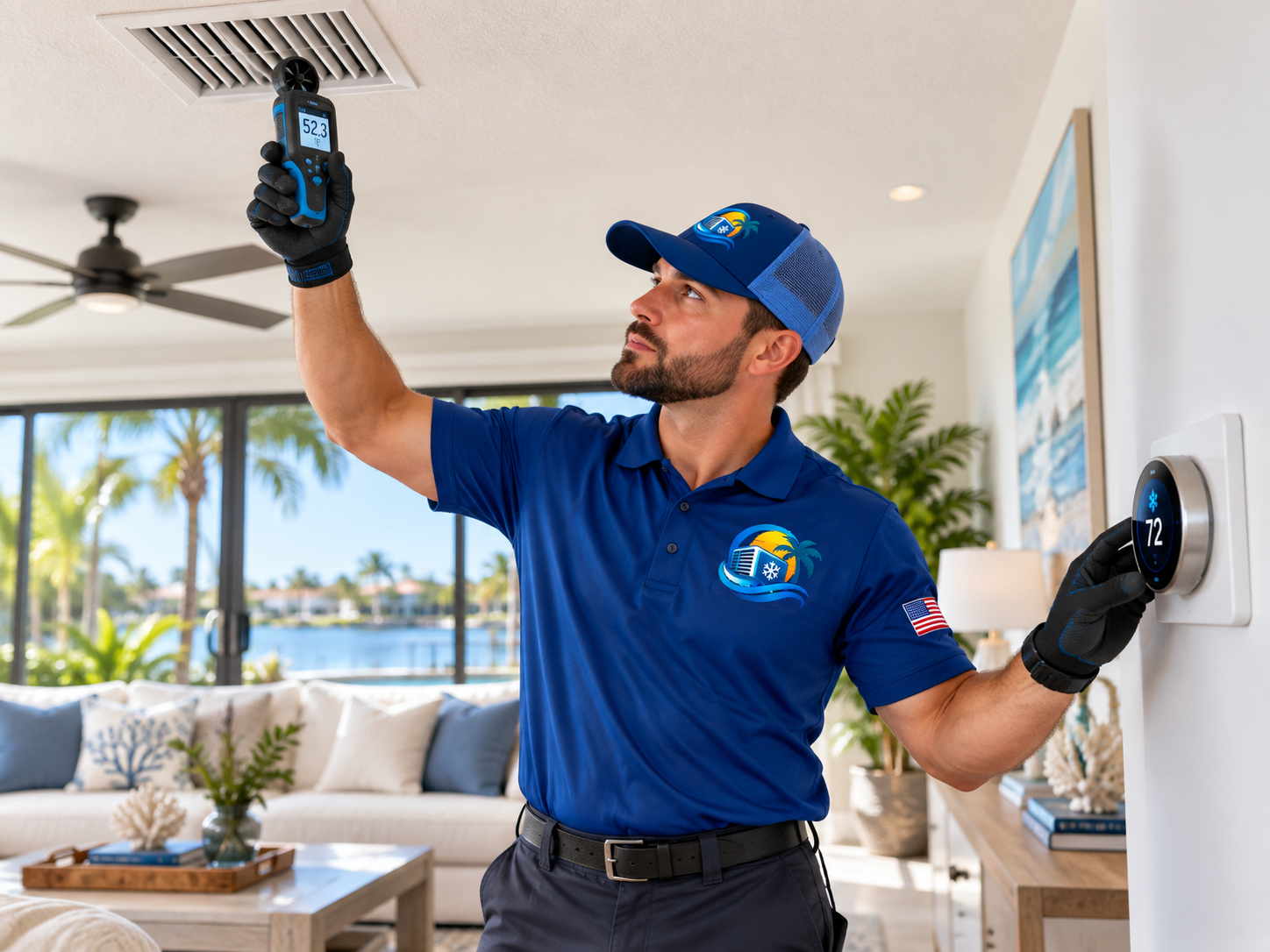
Good maintenance also produces information. Measured readings — capacitor values, amp draws, static pressure, temperature split, superheat, and subcooling — show whether a component is drifting toward failure while there is still time to plan rather than react.
Symptoms
Signs you need this repair
- It has been more than a year since the system was serviced
- Run times have gotten longer without a change in weather or habits
- Higher indoor humidity than in previous seasons
- Musty odor at startup
- Rising electric bills with no explanation
- A history of drain clogs or nuisance shutdowns
Causes
What usually causes the problem
Continuous operation
Near year-round cooling means wear accumulates fast on capacitors, contactors, blower motors, and bearings.
Humidity-driven growth
Wet coils and drains encourage biological growth that restricts drainage and reduces heat transfer.
Outdoor exposure
Sun, rain, salt air, lawn debris, and insects all degrade condenser coils and electrical components.
Filter neglect
Loaded filters reduce airflow, which lowers capacity and can freeze the evaporator coil.
Diagnosis
How the problem is diagnosed
Measurement comes before parts. These are the checks that separate one cause from another.
- Filter inspection, sizing, and replacement guidance
- Condenser coil cleaning and clearance verification
- Evaporator coil inspection and cleaning where accessible
- Condensate pan, drain line clearing, and float switch test
- Capacitor measurement against rated values
- Contactor, wiring, and disconnect inspection for heat damage
- Blower wheel condition, motor amp draw, and fan speed configuration
- Static pressure, temperature split, superheat, and subcooling readings
- Thermostat operation and equipment configuration check
Repair options
What the repair involves
Annual service before summer
The most valuable timing in Palm Bay is ahead of the heaviest cooling load, when drift can be corrected before it becomes a failure.
Twice-yearly service
Systems with a drain clog history, heavy landscaping, pets, or coastal exposure benefit from a second visit.
Targeted cleaning
Coil and blower cleaning recover capacity that has been lost gradually and often reduce run times noticeably.
Proactive part replacement
Replacing a measurably weak capacitor or a pitted contactor on your schedule is far less disruptive than replacing it during a heat wave.
Urgency
How quickly this should be handled
Any water present in or around the drain pan
A capacitor reading well below its rated value
Visible burn marks or heat damage at electrical connections
Ice history or a coil that has visibly frosted before
Palm Bay conditions
Why this happens here
Because the Palm Bay cooling season is so long, the practical maintenance calendar differs from northern advice. Service before the heaviest load, and pay particular attention to condensate drainage, which is the failure most likely to damage your home rather than just your comfort.
Homes near the lagoon should also plan for coil rinsing. Salt residue and mineral deposits from sprinkler overspray both accelerate corrosion and reduce heat rejection, and both respond well to periodic cleaning with plain water.
Cost
What affects the price of this repair
No two systems are identical. These factors move the number up or down, and each is explained before work begins.
Number of systems
Homes with two or three systems require separate inspection and cleaning for each, which scales the visit length and cost.
Condition at first visit
A system that has gone several years without service usually needs deeper coil and blower cleaning than routine annual maintenance.
Access
Attic air handlers, tight closets, and condensers crowded by landscaping take longer to service properly.
Parts found during service
Maintenance pricing covers inspection and cleaning; any weak capacitor, pitted contactor, or failed float switch found is quoted separately.
Frequently asked questions
- How often should AC maintenance be done in Palm Bay?
- At least once a year, ideally before the peak of the cooling season, and twice a year for systems with a history of drain clogs, heavy surrounding landscaping, pets in the home, or coastal salt exposure. The reason is run time: a Florida system may operate two to three times as many hours annually as the same equipment in a northern state, so wear and contamination accumulate faster. Filters need attention far more often than that — typically every one to three months depending on filter type, occupancy, and pets. The most valuable part of the visit is measurement, because drifting readings identify parts heading toward failure while replacement is still a planned event.
- Does AC maintenance actually save money?
- It saves in two ways, one predictable and one probabilistic. The predictable part is efficiency: clean coils, correct airflow, and proper charge reduce run time for the same cooling, which shows up on the electric bill. The probabilistic part is avoided failure — clearing a drain before it overflows into a ceiling, or replacing a weak capacitor before it strands a compressor attempting to start on a 95-degree afternoon. Neither guarantees you will never have a repair, and no honest service claims that. What maintenance reliably does is reduce the number of surprise failures and catch water problems before they damage the house.
- What should be included in a real AC tune-up?
- Look for measurement, not just cleaning. A thorough visit includes filter assessment, condenser coil cleaning, evaporator coil inspection, condensate pan and drain clearing with a float switch test, capacitor readings compared to rated values, contactor and wiring inspection for heat damage, blower wheel condition and motor amp draw, fan speed verification, and system performance readings such as static pressure, temperature split, superheat, and subcooling. Thermostat operation and configuration should be confirmed as well. A visit that consists only of hosing off the outdoor unit and changing a filter has skipped everything that would have predicted a failure.
- Can I do any AC maintenance myself?
- Yes, and a few homeowner tasks matter a great deal. Change or clean the filter on schedule and use the filter type the system was designed for rather than the most restrictive one available. Keep at least two feet of clearance around the outdoor unit and gently rinse the coil with plain water from the outside in — no pressure washer, which bends fins. Keep sprinklers aimed away from the condenser. Make sure the mower discharges clippings away from the unit. Pour a cup of distilled vinegar into the drain cleanout periodically. Leave electrical testing, refrigerant work, and coil cleaning chemicals to a technician.
Related AC services
Areas we serve in Palm Bay
Talk through your AC problem now
Describe what your system is doing — not cooling, leaking, freezing, short cycling, or completely off — and get straightforward next steps.
Air Conditioner Repair Palm Bay FL1501 Robert J Conlan Blvd NE, Suite #459
Palm Bay, FL 32905