
Southeast Palm Bay · Palm Bay, FL · 321-804-8235
AC Repair in Southeast Palm Bay, FL
AC repair in southeast Palm Bay, FL near the Indian River Lagoon. Salt-related coil corrosion, electrical contacts, and humidity control problems. Call 321-804-8235.
Air conditioning repair in Southeast Palm Bay
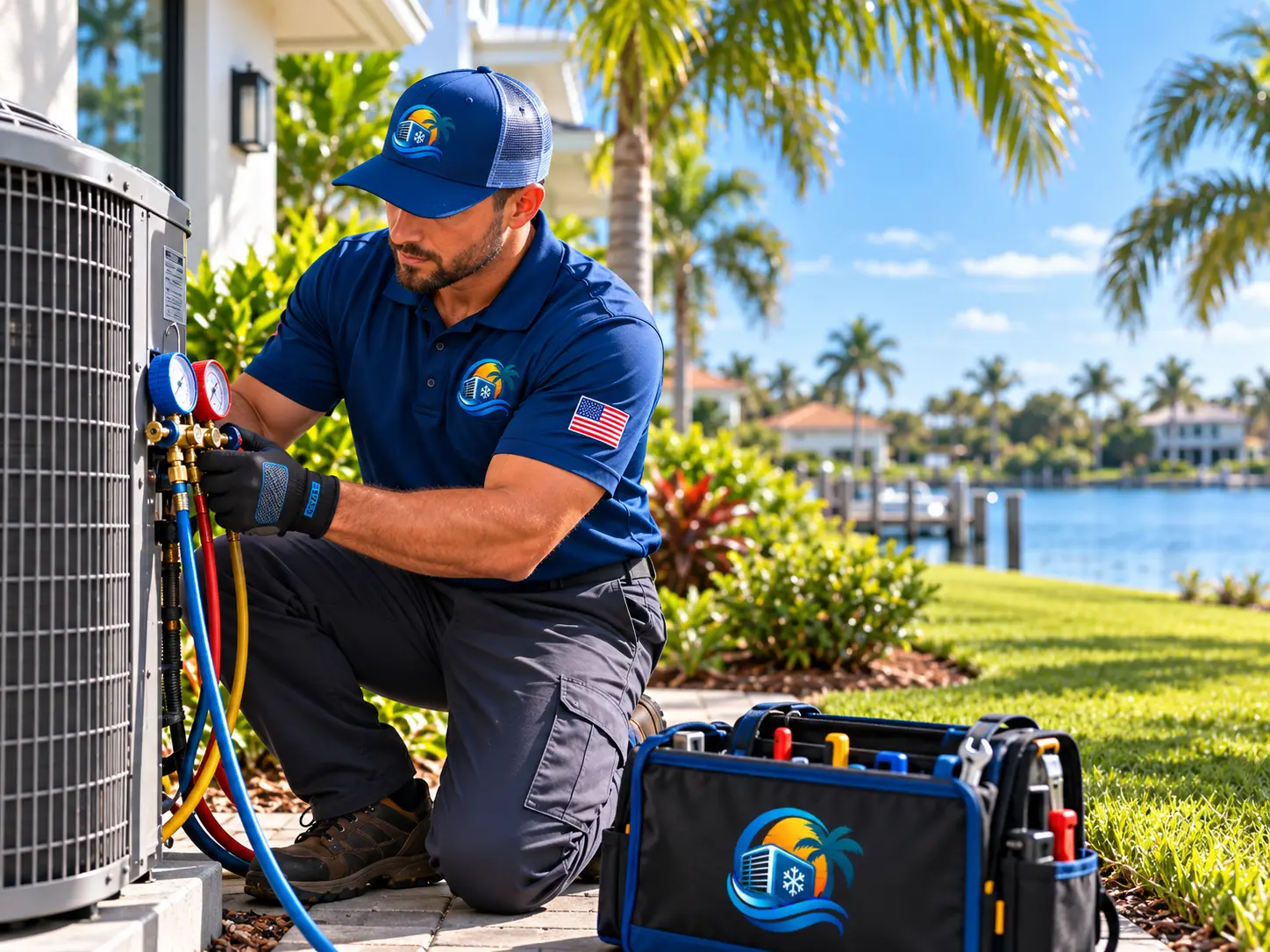
Southeast Palm Bay sits closest to the Indian River Lagoon, and proximity to brackish water changes what fails on an air conditioner. Salt-laden humid air attacks outdoor coils, cabinet fasteners, and electrical contacts, so equipment here often shows corrosion damage before it shows mechanical wear.
Humidity is also relentless in this part of the city. Systems run long cycles for much of the year, condensate volume is high, and anything that reduces heat transfer or airflow shows up quickly as a home that feels damp rather than merely warm.
Common problems
Common AC issues in Southeast Palm Bay
Coil corrosion and refrigerant leaks
Salt exposure accelerates pitting where aluminum fins meet copper tubing, and pinhole leaks are a leading cause of gradual cooling loss here.
Corroded electrical connections
Terminals, lugs, and contactor contacts corrode, creating resistance and heat that shortens the life of capacitors and motors.
Heavy condensate loads
High humidity means high water volume through the drain, so partial blockages become full failures fast.
Cabinet and hardware deterioration
Screws, panels, and pads degrade faster near the water, which affects both appearance and serviceability.
Services
AC repairs commonly needed in Southeast Palm Bay homes
Work in this area emphasizes corrosion-aware diagnosis: careful coil inspection with leak detection, electrical compartment inspection for pitting and heat damage, coil cleaning and rinsing, drain clearing with pan and float switch service, and refrigerant charge verification.
Where a coil has multiple corrosion leaks, patching is not a durable answer. Replacement of the coil — or a comparison against system replacement on older equipment — is presented with the reasoning and cost implications spelled out.
Local conditions
Why Southeast Palm Bay systems behave this way
Salt does not need to be visible to cause damage. Airborne salt deposits on coil fins and electrical terminals, then humidity keeps it active. Periodic rinsing with plain water is one of the few genuinely effective homeowner protections in a coastal setting.
Sprinkler placement compounds the problem. Irrigation water striking a condenser leaves mineral deposits that trap moisture against the fins, so aiming sprinklers away from equipment is worth doing.
High humidity also means dehumidification performance matters as much as temperature here. A system that holds setpoint but leaves the home clammy usually has an airflow, sizing, or capacity issue worth measuring rather than tolerating.
Cost
What affects repair cost in this area
Pricing depends on the actual fault and the work required. These are the factors that matter most here.
- Extent of corrosion and whether coil replacement is required rather than cleaning
- Refrigerant type and volume, which drives the cost of any leak-related repair
- Whether electrical components and wiring need replacement due to corrosion
- Drain assembly condition, including pan replacement where rust is present
- System age, which determines whether coil replacement or system replacement is the better value
Southeast Palm Bay AC repair questions
- Does living near the water shorten AC life in Palm Bay?
- Generally yes, primarily through corrosion. Airborne salt settles on outdoor coil fins and electrical components, and humidity keeps the process active year-round. The most common consequences are pinhole refrigerant leaks in coils and corroded electrical terminals that create heat and premature part failure. Equipment closer to open water tends to show these effects sooner. That does not mean a coastal system is doomed to a short life — regular rinsing, prompt attention to electrical corrosion, coil cleaning, and keeping sprinkler spray off the unit all extend service life meaningfully. Some manufacturers also offer coastal-rated coil coatings worth considering at replacement time.
- Can I rinse my outdoor unit myself to protect it from salt?
- Yes, and it is one of the more useful things a coastal homeowner can do. Turn the system off at the thermostat and the outdoor disconnect first. Then use plain water at normal garden-hose pressure, rinsing the coil gently and, where the cabinet design allows, directing water from the inside out so debris is pushed out rather than deeper into the fins. Do not use a pressure washer, which bends fins and permanently reduces airflow, and avoid harsh cleaners that accelerate corrosion. Doing this a few times a year in a salt-exposed location removes deposits before they establish, which is far easier than reversing corrosion later.
- Why does my home feel humid even when the AC keeps up?
- Because temperature and moisture removal are two different jobs. In southeast Palm Bay, outdoor dew points stay high for much of the year, so a system has to run long enough — with enough airflow across a cold coil — to condense and drain a lot of water. Short cycling from an oversized system, restricted airflow from a dirty coil or filter, or capacity lost to a corroded condenser coil all leave moisture in the air even when the thermostat reads correctly. Diagnosis measures airflow and run behavior, and the fix is usually restoring capacity or correcting cycling rather than lowering the setpoint further.
- Is a coated or coastal coil worth it here?
- For homes close to the lagoon, it is worth asking about at replacement time. Coil coatings and coastal-rated equipment are designed to slow the corrosion that shortens coil life in salt-exposed environments, and they typically add modest cost relative to the equipment total. They are not a substitute for maintenance — rinsing, cleaning, and keeping irrigation off the unit still matter — and they cannot be retrofitted meaningfully onto an existing coil. The practical approach is to keep the current system clean and well maintained, then weigh coastal-rated options seriously when replacement becomes the right decision.
AC services for Southeast Palm Bay
Nearby areas served
Need AC repair in Southeast Palm Bay?
Call and describe what your system is doing. You will be connected with an AC repair service provider who can diagnose the fault and explain options and pricing before any work starts.
Air Conditioner Repair Palm Bay FL1501 Robert J Conlan Blvd NE, Suite #459
Palm Bay, FL 32905